 | |||||||||||||||
 |
 |
 |
|
 |
|
 |
|
 |
|
 |
|
 |
|
 |
 |
CSB Core Faculty
- Ray Blind
- Tony Capra
- Walter Chazin
- Steven Damo
- Jamaine Davis
- Martin Egli
- Brandt Eichman
- Steve Fesik
- Tina Iverson
- Lauren Jackson
- Erkan Karakas
- Brett Kroncke
- Borden Lacy
- Galina Lepesheva
- Carlos Lopez
- Terry Lybrand
- Hassane Mchaourab
- Jens Meiler
- Terunaga Nakagawa
- Yi Ren
- Chuck Sanders
- Ben Spiller
- Michael Stone
Emeritus:
- Al Beth
- Paul Bock
- Gerald Stubbs
- Michael Waterman
Chuck Sanders
Structural and Chemical Biology of Membrane Proteins and Related Diseases
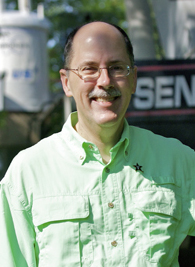 Membrane proteins respresent a large and important class of proteins that remain especially difficult to study. Over 60% of all drug molecules target membrane proteins. Moreover, hundreds of diseases involve the misassembly or misfolding of integral membrane proteins. The Sanders lab is devoted to characterizing the structures, folding and misfolding, and molecular mechanisms of membrane proteins using a variety of biochemical and biophysical methods (but especially NMR). We are a biological problem-oriented lab. However, some of the problems we wish to solve require in-house development of new methods and technologies. Please visit our home page for an overview of our active research projects.
|
VU Home |
VUMC Home |
People Finder |
University Calendar
webmaster- modified on July 03, 2018 |